
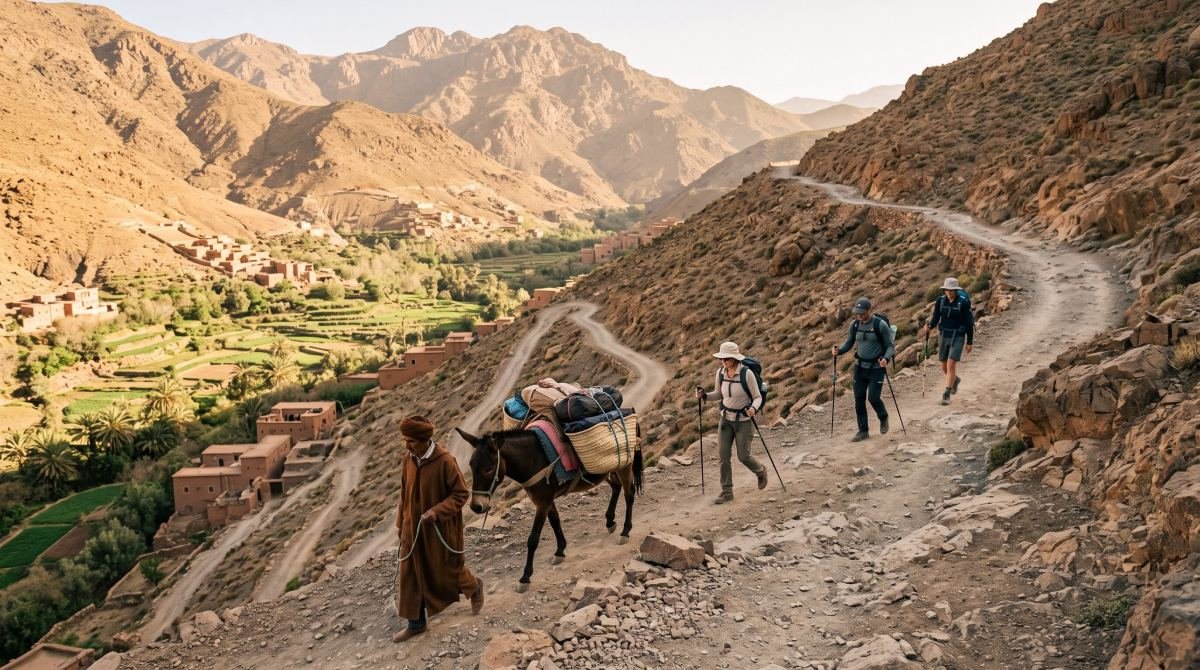
How we pace high-altitude days
The High Atlas are not raced, they are walked. Pacing is what lets a group of different ages and backgrounds reach a pass together, still smiling at the top. Here is how our guides plan the day so that the summit feels earned rather than survived.
Slow starts and a steady rhythm
Most days begin gently and build. We start early enough to walk in the cool of the morning, take a first water stop within the hour, and settle into a rhythm we can keep all day. The goal is an even effort on the climbs, not speed on the flats.
Short steps and honest turnaround times
On steep sections we shorten our stride and slow down before we are out of breath, rather than stopping suddenly when we are. Guides agree on a turnaround time before any pass: if the weather or the group tells us to turn back, we do. The mountain will be there another day. On winter routes like the Toubkal Snow Ascent, that rule matters even more.
Why ‘slow’ is actually quick
- Less wasted energy climbing means fewer and shorter rests
- A steady pace lets the body adapt to altitude hour by hour
- Stopping to enjoy the view keeps morale — and photo moments — high
- We arrive at camp fresh enough to sleep well for tomorrow
Pace is a habit you can practise anywhere, on any hill. Our Toubkal Summit Trek is built around this steady approach — slow starts, water stops and a summit that feels earned rather than survived.